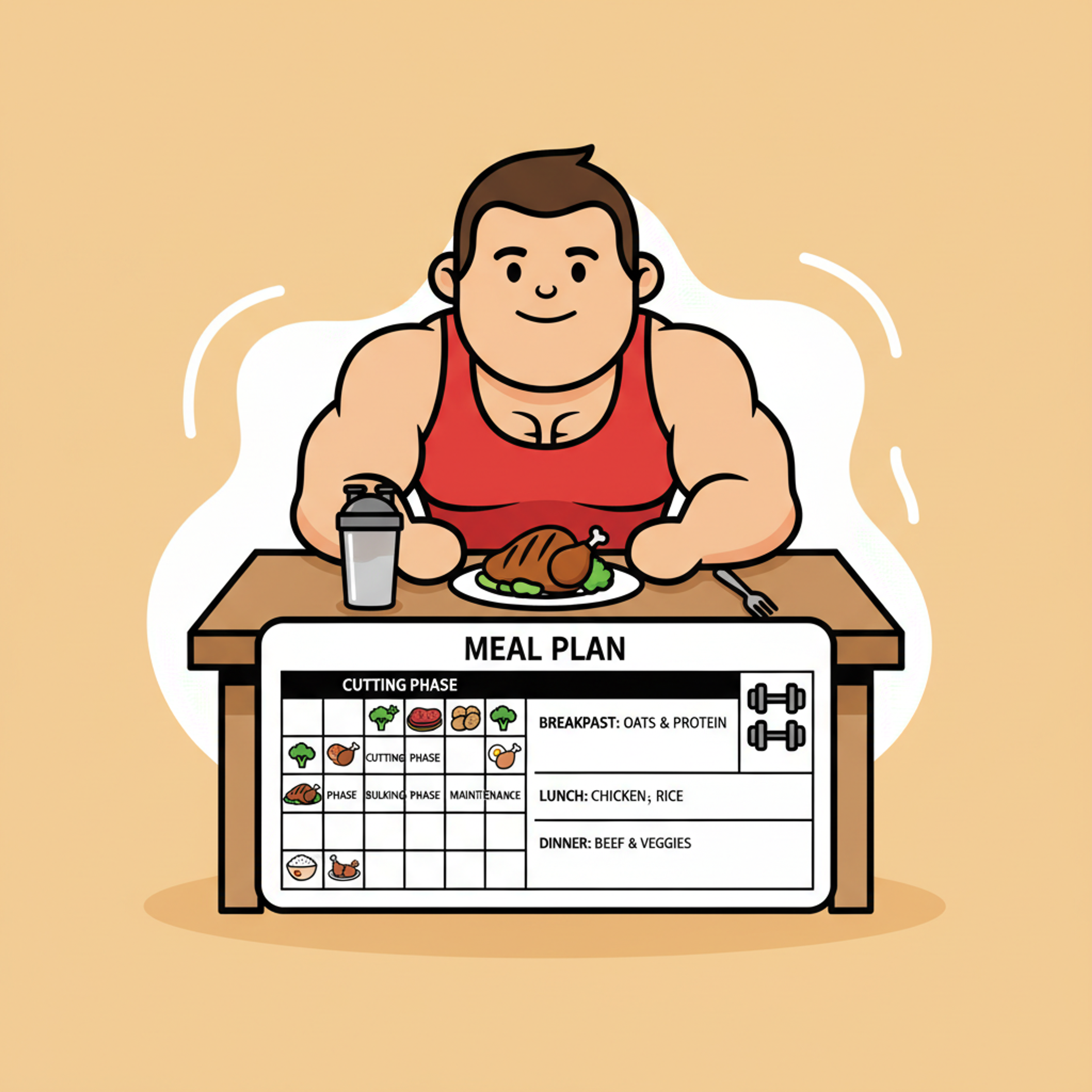
Most people eat the same way year-round regardless of what phase they're training in. That is like driving in first gear on the highway—technically moving, but leaving a lot on the table.
Nutritional periodization means matching your food intake to your training phase. Not bulking and cutting in the crude sense—aligning substrate availability with physiological demand.
1. Hypertrophy Phase: Surplus (Building)
- Caloric state: Moderate surplus (250–500 kcal above maintenance).
- Primary fuel: Carbohydrates.
* Hypertrophy training (high volume, 8–15 reps) runs on glycogen. High carb intake keeps glycogen stores full, which is anabolic (cell swelling) and muscle-sparing.
* Acute insulin elevation post-training drives nutrients into the cell. Chronic elevation is problematic; the post-workout spike is useful.
- Goal: Maximize the SRA curve. Recovery is energetically expensive. You cannot build without raw materials.
2. Strength Phase: Maintenance (Tuning)
Volume drops, intensity rises. The metabolic demand per session decreases.
- Caloric state: Maintenance or slight surplus.
- Primary fuel: Balanced.
* Reduce carbohydrates slightly as volume decreases.
* Increase fats slightly to support hormonal health.
* Keep protein high (2g per kg bodyweight) to support repair.
- Goal: Neural efficiency doesn't require as much building material as tissue growth, but you still need energy for high-intensity output.
3. Peaking Phase: Leverage Management (Racing)
4–6 weeks out from competition. The game changes.
- Caloric state: Maintenance or slight deficit (to make weight if needed).
- Focus: Sodium and water.
* A hydrated cell is a strong cell. Water retention in the joints improves leverage and provides cushioning.
Do not* cut sodium. Salt your food. Drink 4–6 liters of water daily. Being "bloated" is good for pressing mechanics.
- Creatine: Essential for the ATP-PC system used in maximal singles. Make sure stores are saturated.
- Goal: Maintain leverage, not create a new physique.
The Common Mistake
Most people eat for hypertrophy when they're peaking (gaining unnecessary fat) or eat for peaking when they're building (staying small and dehydrated).
Practical Example
80kg lifter, maintenance = 2500 kcal.
Phase 1: Hypertrophy (12 weeks)
- Calories: 2800.
- Macros: High carb (400g), moderate protein (180g), low/moderate fat (50g).
- Food: Rice, oats, potatoes, chicken, lean beef.
Phase 2: Strength (8 weeks)
- Calories: 2500–2600.
- Macros: Moderate carb (300g), moderate protein (180g), moderate fat (70g).
- Food: Add oils, eggs, avocado.
Phase 3: Peaking (4 weeks)
- Calories: 2500.
- Macros: Lower carb (200g, timed around training), high protein (200g), moderate fat.
- Water/salt: Consistently high. No fluctuations.
About Rasmus
Powerlifter and coach with more than 7 years in the game.